Main Floor
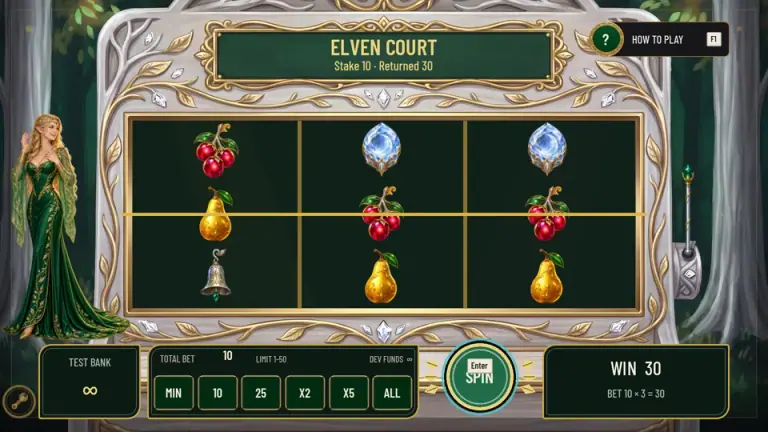
Elven Court
A jewel-box three-reel slot with weighted strips and one readable payline.

Mini game · Godot 4 · AI / LLM assisted
House Rules is a nine-game, four-room experience. Human direction shaped the rules, taste, and release decisions; AI accelerated exploration, implementation, testing, and iteration.
Play money only · No purchases or wagering

The player experience
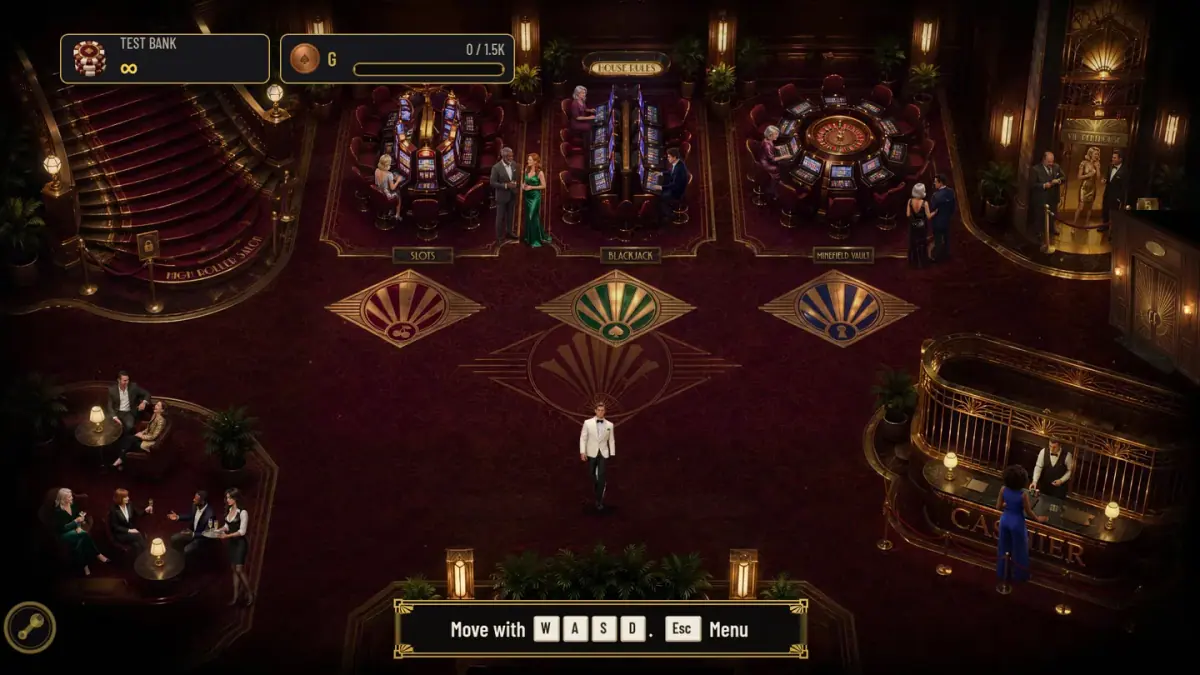
The challenge was not simply to make nine mini games. It was to make them feel like one product: a walkable casino, one shared bankroll, one progression arc, consistent controls, and nine distinct visual identities.
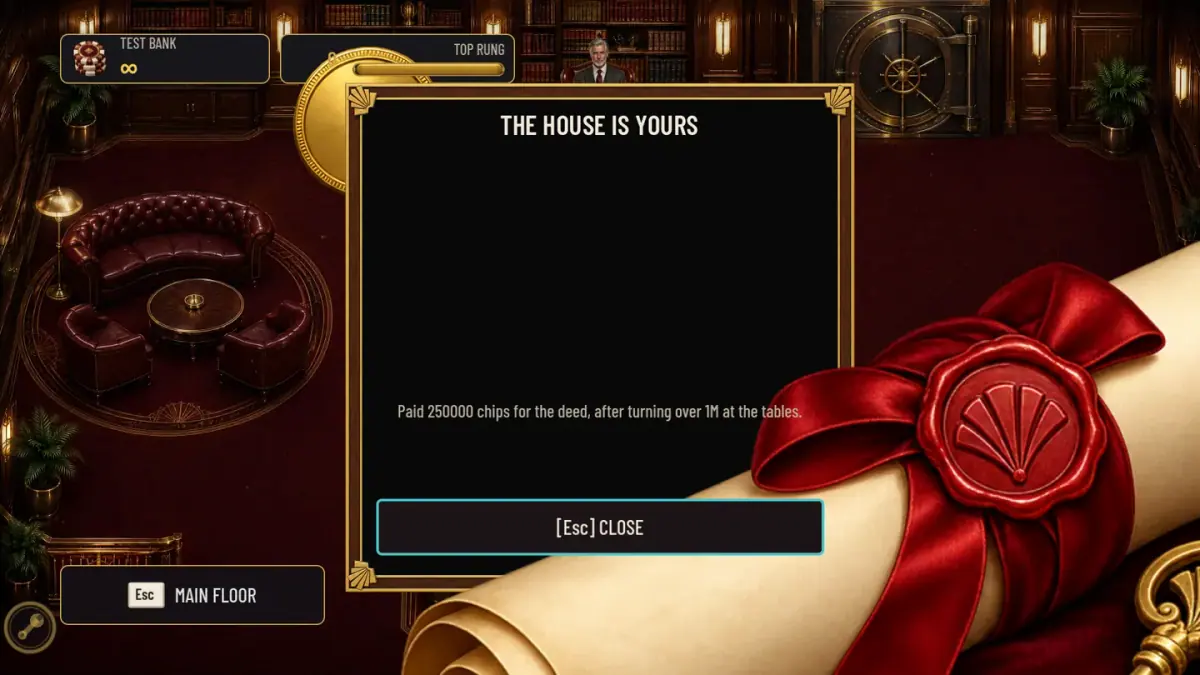
Walk to a cabinet. Learn its rules. Carry your progress from table to table. Earn the deed to the House.
The collection
Familiar casino structures become distinct worlds—from an elven slot and magical vault to tennis Plinko, pirate crash, and a harlequin cluster game.
Main Floor
A jewel-box three-reel slot with weighted strips and one readable payline.
Main Floor
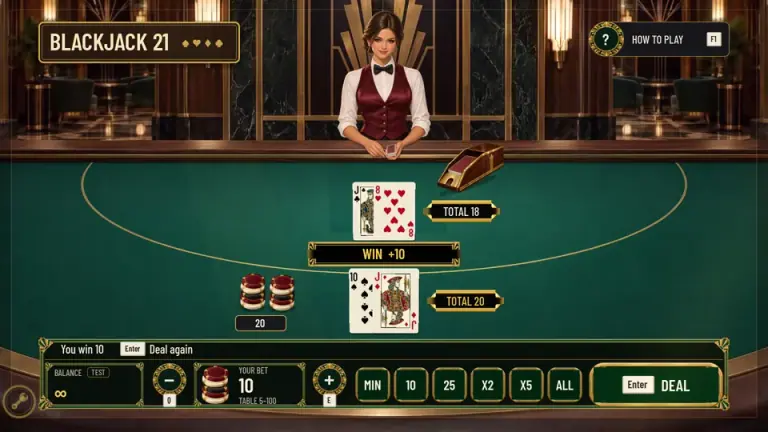
A complete six-deck table with visible decisions, settlement, and dealer play.
Main Floor
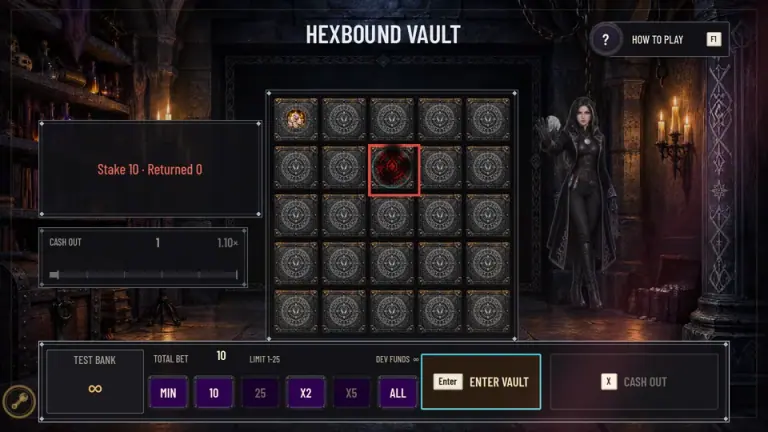
A risk-and-cash-out game presented as a forbidden magical vault.
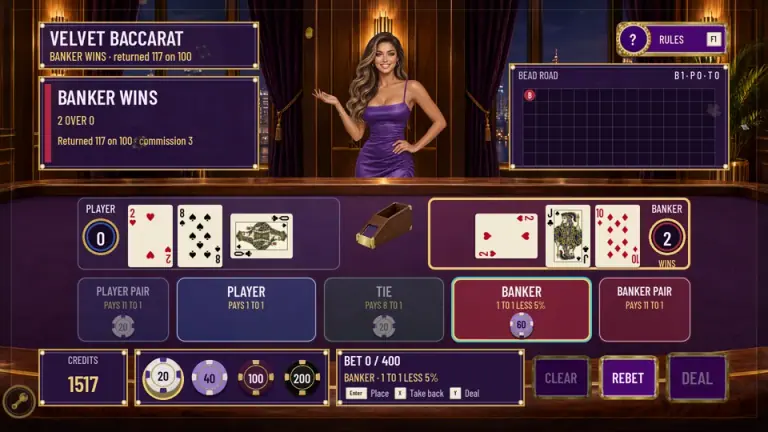
High Roller Salon
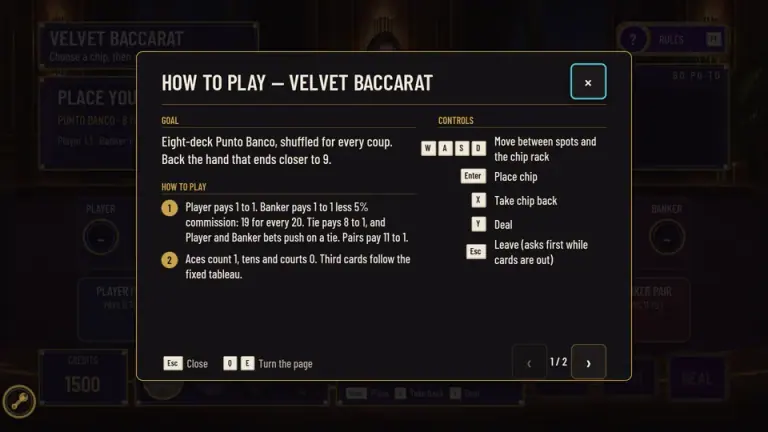
Punto banco with exact commission rules, card squeeze, and a persistent bead road.
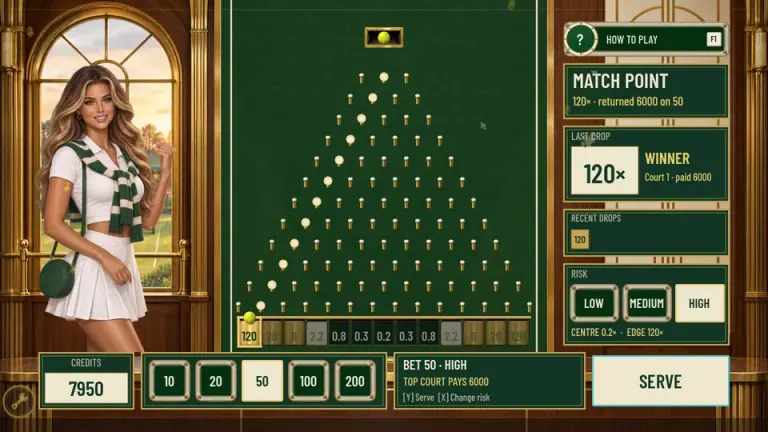
High Roller Salon
Tennis-themed Plinko with three risk profiles and live physical feedback.
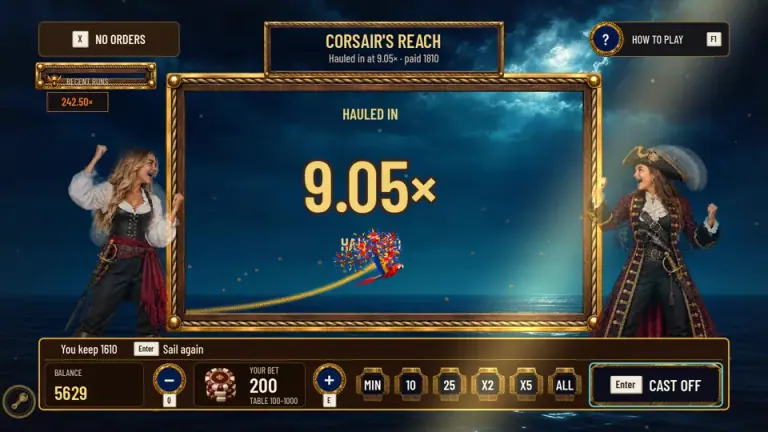
High Roller Salon
A crash game where a parrot climbs and the player chooses when to haul in.
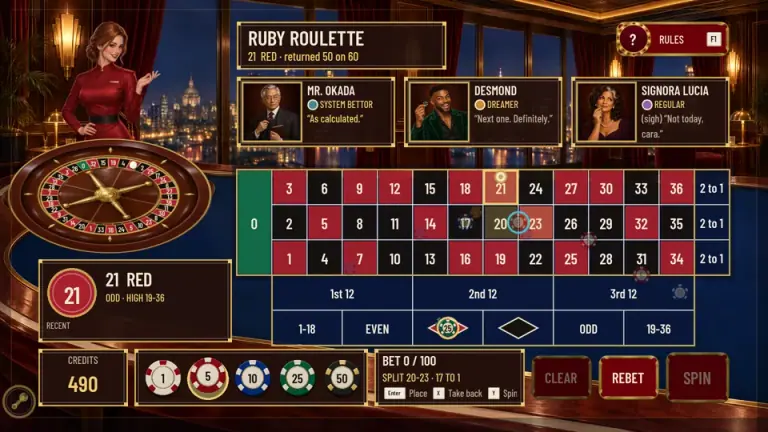
VIP Penthouse
Single-zero roulette with keyboard-navigable inside and outside betting.
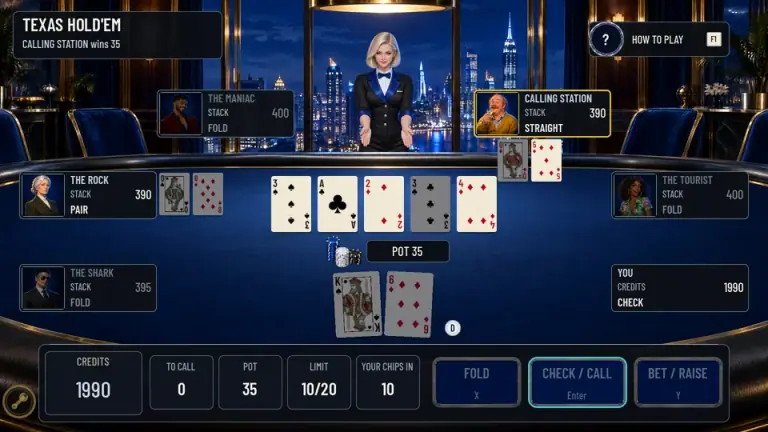
VIP Penthouse
Fixed-limit poker against five NPC play styles with full showdown presentation.
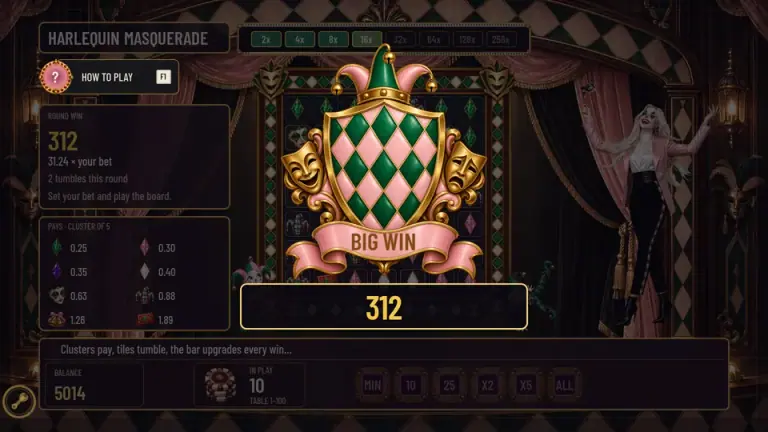
VIP Penthouse
Cluster pays, tumbles, escalating multipliers, and staged win celebrations.
How the product works
Each cabinet calculates one round result. A single session layer settles it into the shared wallet and save—keeping animation and effects outside the game economy.
Zero to hero · Build review
The project moved from a one-line experiment to a release through product rules, reusable code, a traceable art pipeline, and evidence-driven review.
Real implementation excerpt
The cabinet session rejects closed, missing, or repeated results before the wallet can change. That small boundary makes nine very different games dependable.
Read cabinet_session.gdfunc apply_result(result: RoundResult) -> bool:
if _is_closed or result == null or _seen_results.has(result):
return false
_seen_results[result] = true
if not Wallet.try_apply(result.stake, result.payout):
context.balance = Wallet.balance
return falseOne asset, three states
Hexbound Vault’s host shows why a generated image is a starting point—not a shipped asset.


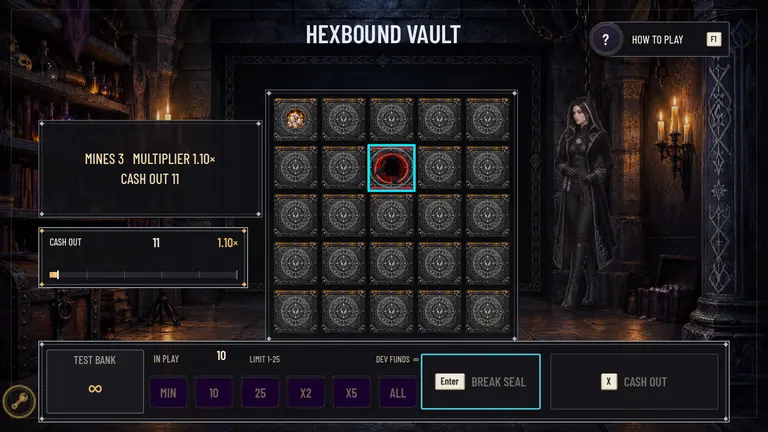
How it was built
The roadmap documents completed work—not promises. Every stage moved through selection, integration, capture, and review before it became part of the release.

Product contract, cabinet rules, progression, and accessibility constraints.
Deterministic game logic, settlement boundaries, and reproducible outcomes.
Four layered rooms, nine themed cabinets, hosts, UI systems, and motion.
Automated captures exposed focus, scaling, collision, copy, and composition defects.
Regression suites, million-round simulations, public repository, and MIT release.
The asset system
Generated and hand-directed source art was cleaned, aligned, converted into reusable production assets, and judged inside the engine—not in isolation.
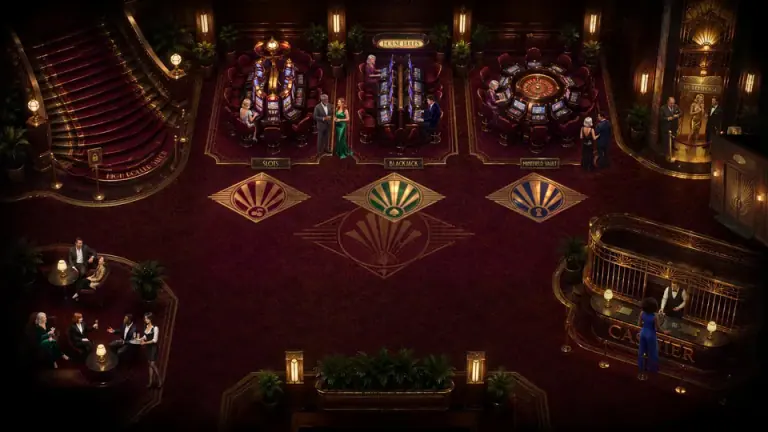
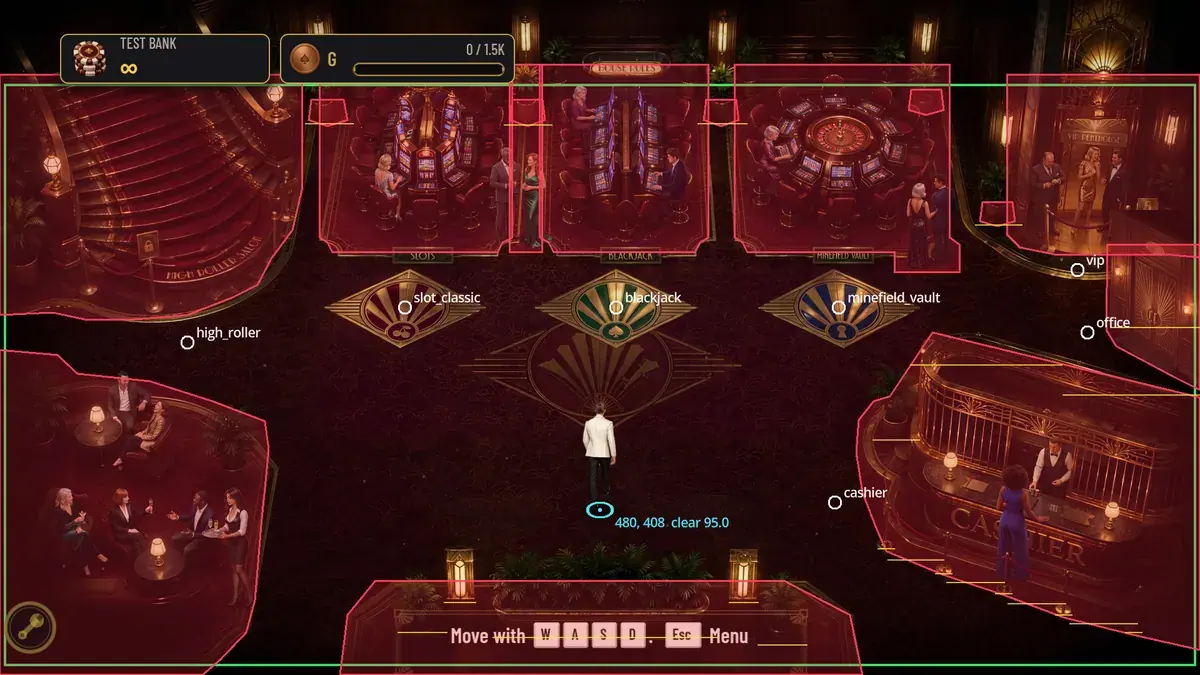
Layered 4K rooms with independent foreground, collision, and depth behavior.

Aligned hosts, staff, reactions, and eight-direction player motion.

Reusable panels, buttons, medallions, focus states, and progression pieces.
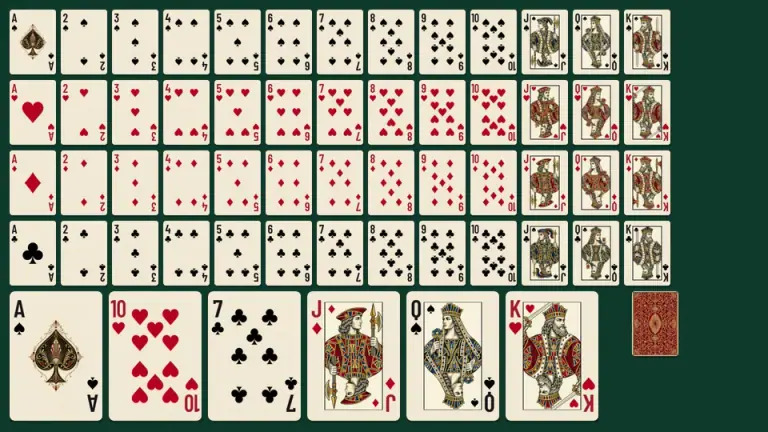
One reusable deck for Blackjack, Baccarat, Roulette presentation, and Hold’em.

Eight-direction movement calibrated to room perspective and painted characters.
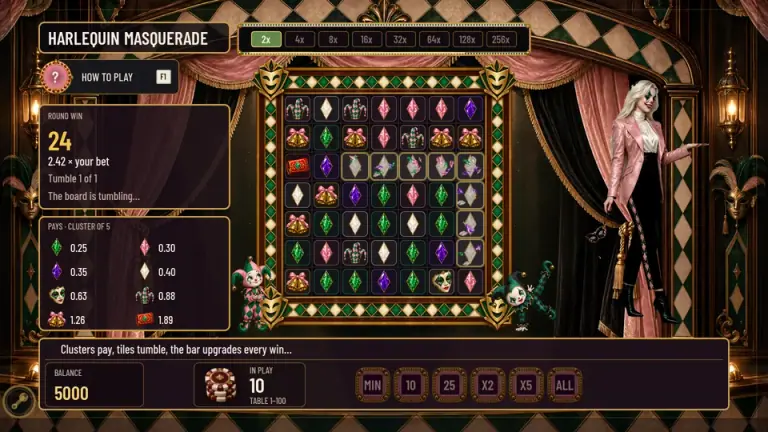
Cabinet-specific reveals, wins, tumbles, and reduced-motion alternatives.
Human direction × AI acceleration
AI expanded the production surface. Human judgment set the goals, rejected weak output, shaped the systems, and made the final release decisions.
Human
AI
AI accelerated production; it did not replace verification or authorship decisions.
Engineering proof
The release gate covers deterministic replays, resolution checks, navigation, collision, game math, and long-run simulations. The game runs offline, saves locally, and sends no telemetry.
Accessibility is part of the product
Keyboard and controller navigation, visible component-contained focus, device-aware prompts, paginated help, minimum target sizes, and reduced-motion behavior share one consistent interaction system.

The outcome
What began as an AI-building experiment became a complete public v1.0: nine games, four connected rooms, shared progression, reproducible art pipelines, automated captures, and a green release gate.